Heavy Copper PCB Manufacturing for Aerospace and Satellite Applications
Guangdong Sayfu is an experienced heavy copper PCB manufacturer, providing reliable printed circuit boards for aerospace and satellite applications. Aerospace has become an increasingly active sector in recent years. Over the next 20 years, the number of aircraft is expected to double, and commercial space travel is gradually becoming a reality. Companies such as SpaceX are already exploring ultra-high-speed global transportation concepts.
As a result, the demand for PCBs used in aerospace and space systems continues to grow. These applications place extremely high requirements on design discipline, manufacturing consistency, and long-term reliability. PCB designers and manufacturers must clearly understand the specific rules and constraints of aerospace electronics.
At Sayfu, our technical team works closely across PCB layout, fabrication, and after-sales support to ensure customer requirements are fully understood and consistently met.
Reliability Is the Core Requirement
In aerospace and satellite systems, reliability is not a goal—it is a prerequisite. Customers typically expect electronic systems to operate 15 to 20 years with zero failures. Once deployed, repair or replacement is often impossible.
Achieving this level of reliability must start at the design and fabrication stage. Rather than using cutting-edge but unproven technologies, Sayfu emphasizes mature, well-validated processes. Conservative design choices, stable materials, and controlled manufacturing methods are essential for long-life aerospace electronics.
Heavy Copper for Thermal and Power Management
Most space and aerospace applications rely on heavy copper PCBs, typically exceeding 2 oz copper, and in many cases reaching 4–5 oz per layer. It is not uncommon to see 20-layer boards with heavy copper on every layer.
Thermal management in space environments depends almost entirely on conduction and dissipation, as active cooling solutions such as fans are not available. Thick copper layers, extensive thermal via structures, and mechanical coupling to the chassis are used to dissipate heat efficiently. In satellites, energy efficiency is critical, and copper itself becomes part of the thermal design strategy.
Material Selection: Polyimide
For long-life space missions, polyimide materials are used in the majority of designs. Geostationary satellites with service lives of 15 to 20 years almost exclusively rely on polyimide due to its thermal stability and mechanical reliability.
For low-earth-orbit satellites with shorter lifetimes, alternative materials may be acceptable. Some suppliers, including Rogers, are developing advanced materials that are gaining interest in newer space programs.
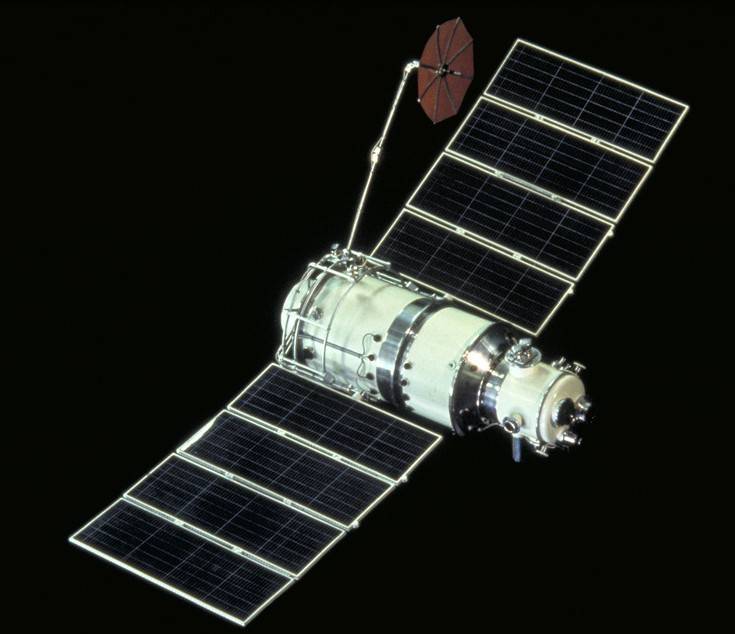
Importance of a Standardized Manufacturing Process
When selecting a heavy copper PCB manufacturer for aerospace or defense applications, process standardization and repeatability are critical. Every manufacturing step must be controlled, measured, and documented.
Satellite customers often require DPA (Destructive Physical Analysis), where finished boards are intentionally destroyed to verify plating thickness, copper distribution, and internal structure. SPC data is commonly requested to demonstrate consistent process control across production batches.
Surface Finish and RoHS Considerations
RoHS compliance does not apply to most defense, aerospace, and satellite applications. Many aerospace customers continue to use leaded HASL surface finishes because alternative finishes introduce thermal and mechanical risks.
While finishes such as ENIG can be used on heavy copper PCBs, assembly is typically performed using leaded solder to reduce the risk of brittle joints and high-temperature failures. In aerospace environments, minimizing risk is far more important than regulatory alignment.
Packaged and Encapsulated Electronics
In aircraft, most mission-critical electronics are housed in sealed and encapsulated enclosures. Although cockpit and cabin electronics operate in controlled environments, fuselage, wing, and engine electronics experience extreme thermal cycling.
These systems may face sub-zero temperatures at altitude and elevated temperatures on the ground, often multiple times per day. Heavy copper PCBs are essential to withstand these repeated thermal stresses without degradation.
Testing Requirements for Aerospace PCBs
Heavy copper PCBs for aerospace must pass extensive testing regimes. Satellite customers frequently perform thermal cycling in vacuum chambers to simulate zero-gravity and space temperature extremes, typically ranging from –50°C to +125°C.
In aviation, electronics must function reliably whether operating in Arctic environments or desert climates. Control systems may transition between these extremes in a single flight, making thermal robustness a non-negotiable requirement.
Compliance with Aerospace Standards
For military and space applications, IPC-6012DS is commonly required. This standard is an enhanced version of IPC Class 3, with stricter requirements for plating thickness, quality acceptance, and documentation.
Aerospace programs demand extensive quality records, microsection analysis, FAIRs, and process documentation. Some satellite customers exceed IPC Class 3A requirements, requiring microsection analysis at rates higher than 100% to ensure absolute compliance with their internal specifications.
Typical Aerospace Applications for Heavy Copper PCBs
Heavy copper PCBs are widely used in aerospace systems such as:
- Radio communication systems
- Radar installations
- Power converters and power supplies
- LED lighting systems
- Instrumentation and control systems
- Temperature sensing modules
- Audio interface systems
- Missile guidance and control systems (e.g. AMRAAM, ASRAAM)
- Auxiliary Power Units (APU)
Supporting reliable electronics starts with clear communication and controlled manufacturing.
Ready to discuss your PCB requirements?
Share your project details with our team and we will review your design and manufacturing needs.