Turnkey PCB Assembly — We Source the Parts, Build the Boards, and Deliver Tested PCBAs
SAYFU provides turnkey PCB assembly services for hardware teams that want one supplier to manage PCB fabrication, component sourcing, SMT and through-hole assembly, inspection, testing, and final delivery.
Instead of coordinating a PCB factory, a component supplier, and a separate assembly shop, you can send us your Gerber files, BOM, CPL, assembly drawing, quantity, and testing requirements. Our team reviews the build, checks sourcing risks, manufactures the PCB, assembles the board, and delivers tested PCBAs ready for your next development or production stage.
- Full turnkey PCB assembly from Gerber and BOM to finished PCBA
- PCB fabrication, component sourcing, SMT, DIP, mixed assembly, and testing
- BOM review, shortage risk check, and alternate component confirmation
- SPI, AOI, X-ray, ICT, and functional testing support based on project needs
- Prototype, low-volume, and production builds with engineering continuity
📩 For a fast quote: Please send your PCB files and BOM list to [email protected]
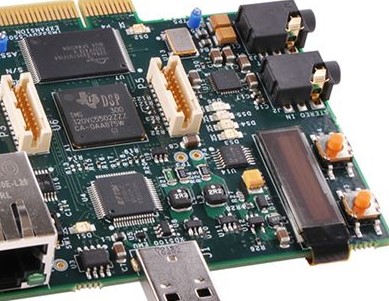
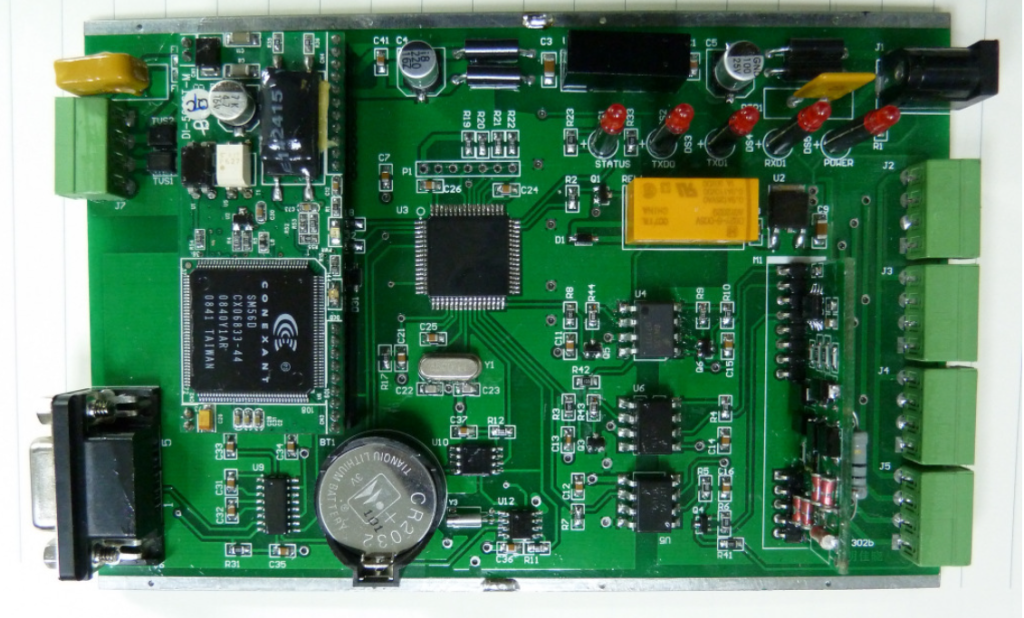
What’s Included in Our Turnkey PCB Assembly Service
Turnkey PCB assembly at SAYFU is not just a general “one-stop” claim. It is a defined manufacturing scope covering the board, the components, the assembly process, and the inspection steps needed to deliver a tested PCBA.
PCB Fabrication
SAYFU fabricates the bare PCB and connects it directly with the assembly process. This helps reduce the communication gap between a separate board house and assembly supplier, especially when fabrication details affect assembly yield, solderability, panelization, or testing.
Our PCB manufacturing capabilities cover standard rigid boards, HDI structures, RF materials, metal core options, flex and rigid-flex boards, and high-density multilayer designs.
BOM-Based Component Sourcing
We source components according to your BOM and check key details before procurement begins, including manufacturer part numbers, package and footprint, quantities, DNP/DNI items, polarity-sensitive parts, electrical parameters, and approved alternatives.
For turnkey projects, BOM quality directly affects cost, lead time, and production stability. That is why sourcing review is handled before the order is released, not after parts become a problem. For more details, see our component procurement service.
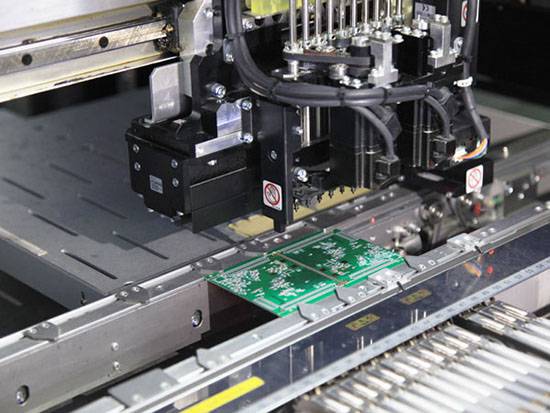
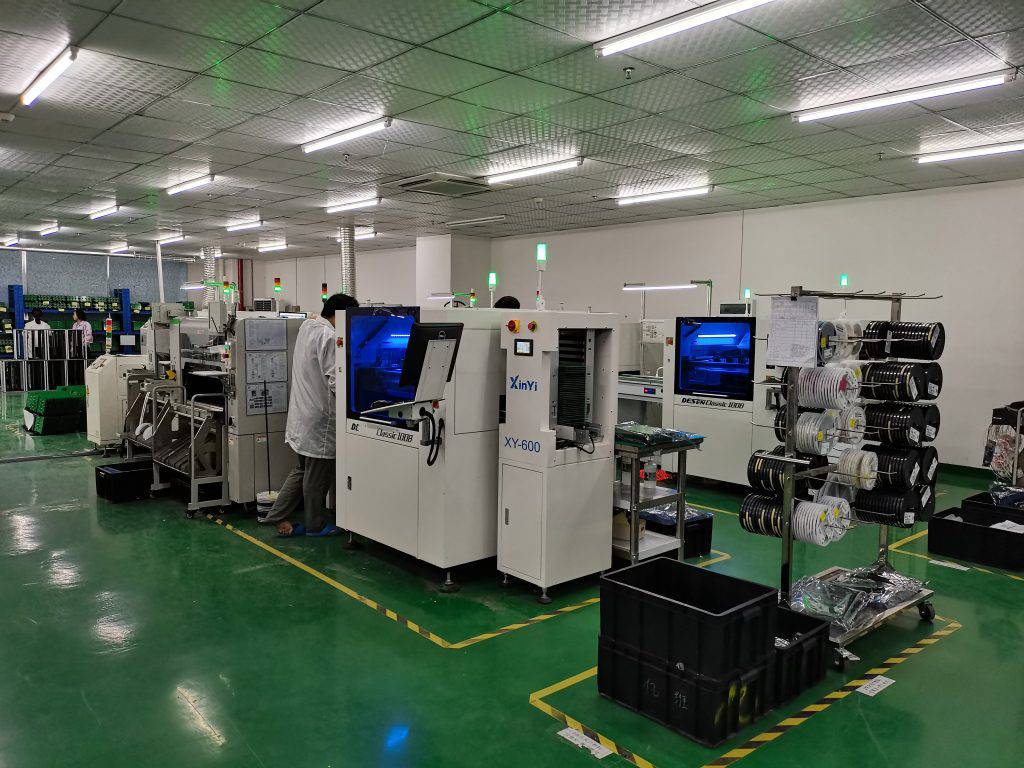
SMT, DIP, and Mixed Assembly
SAYFU supports SMT assembly, through-hole / DIP assembly, mixed-technology assembly, double-sided SMT, BGA, QFN, fine-pitch components, connectors, and manual precision assembly for irregular parts.
This makes the service suitable for prototype PCB assembly, low-volume PCB assembly, pilot runs, and production builds that require both PCB manufacturing and PCBA assembly under one process.
Inspection, Testing, and Final Delivery
Inspection is performed at defined checkpoints throughout the build, including component receiving, solder paste printing, placement, reflow, hidden solder joints, and final testing.
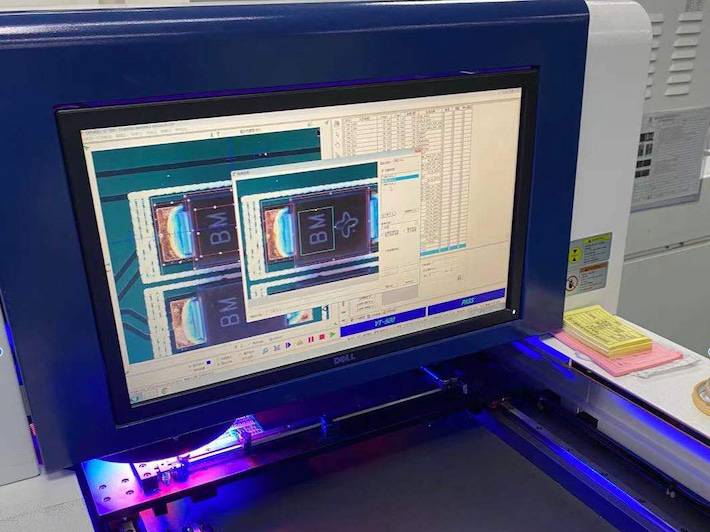
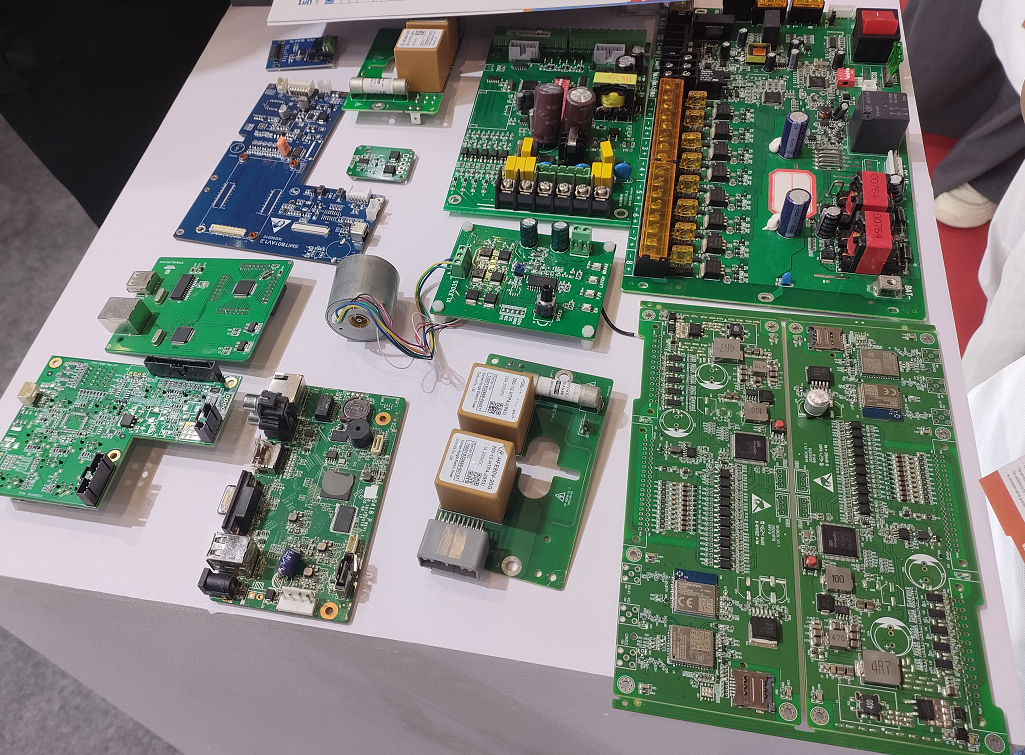
Depending on the project, inspection and testing may include SPI, AOI, X-ray, ICT, functional testing, programming, or customer-defined test procedures. Projects that require firmware loading or programmed ICs can also use our IC programming and testing services.
Need a complete turnkey PCBA build? Send your Gerber files, BOM, CPL, assembly drawing, and test requirements.
From BOM Review to Final PCBA Delivery — How It Works
A reliable turnkey PCBA project depends on clear file review, controlled sourcing, and defined process steps. SAYFU manages the build through a structured workflow:
Submit Files → BOM Review & Quote → Component Sourcing → PCB Fabrication → SMT/DIP Assembly → Inspection & Testing → Packaging & Delivery
Step 1 — Submit Gerber, BOM, CPL, and Assembly Requirements
For an accurate quote, please provide Gerber files, BOM, CPL / pick-and-place file, assembly drawing, quantity, and any testing or programming requirements.
Missing files may affect quote accuracy, assembly program generation, polarity confirmation, stencil preparation, and testing coverage.
Step 2 — BOM Review and Turnkey Quote
Before quoting, we review the BOM for manufacturer part numbers, package compatibility, quantities, DNP items, polarity-sensitive components, alternate parts, stock status, and long-lead-time risks.
This helps identify possible cost or delivery issues before production starts.
Step 3 — Component Sourcing and Customer Confirmation
If a component is out of stock, obsolete, restricted, or difficult to source, we flag the risk and confirm possible alternatives with you.
SAYFU does not treat alternate components as a silent replacement. For engineering reliability, substitute parts should be confirmed before purchase and production.
Step 4 — PCB Fabrication and Assembly Preparation
PCB fabrication, panelization, stencil preparation, fiducial confirmation, tooling rails, and material staging are prepared before assembly.
This stage helps ensure the board can move smoothly from fabrication to SMT or through-hole assembly without unnecessary handoff delays.
Step 5 — SMT/DIP Assembly and Process Control
The assembly process may include SMT placement, reflow, through-hole insertion, wave soldering, selective soldering, hand soldering, BGA/QFN assembly, and double-sided SMT processing.
Build sequence and inspection points are planned according to the board design, package complexity, and testing requirements.
Step 6 — Inspection, Testing, Packaging, and Delivery
After assembly, boards are inspected and tested according to the agreed project requirements. Any rework or process feedback is tracked before final packing and shipment.
Component Sourcing and BOM Risk Management
For turnkey PCB assembly, the BOM is often the largest source of cost, delay, and quality risk. A board may be easy to assemble, but if one critical component is unavailable, obsolete, mismatched, or incorrectly substituted, the entire project can be delayed.
SAYFU treats BOM review as a core part of the turnkey process.
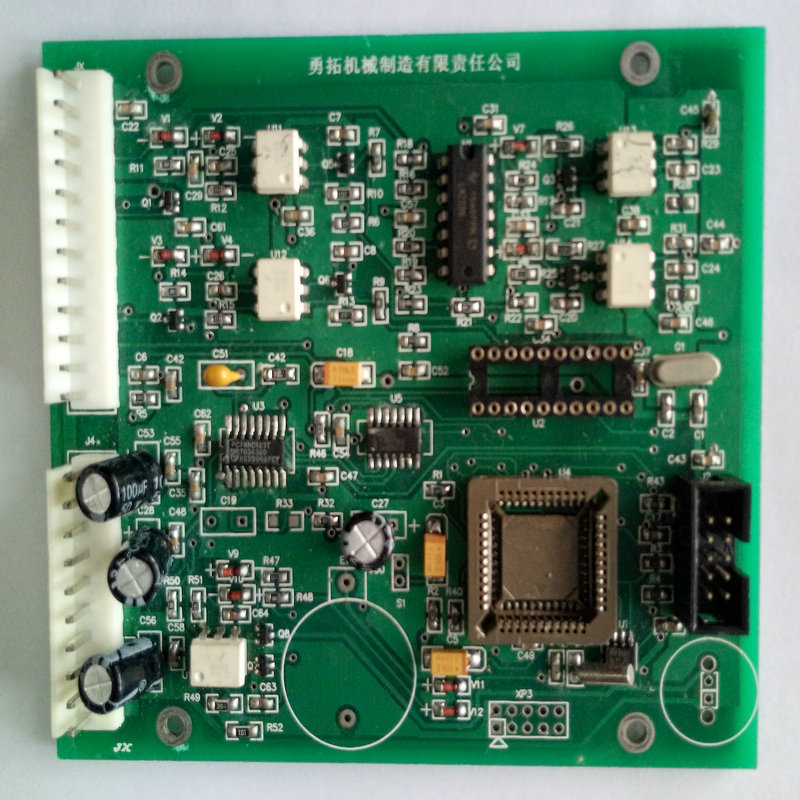
BOM Completeness Review
Before sourcing starts, we check whether the BOM contains enough information for reliable procurement and assembly.
- Manufacturer part number
- Component quantity
- Package / footprint
- Voltage, tolerance, power rating, or other key parameters
- DNP / DNI items
- Polarity and orientation notes
- Approved alternate components
- Special sourcing or brand requirements
Shortage and Obsolete Part Risk Check
Out-of-stock, discontinued, and long-lead-time parts are identified as early as possible because they directly affect quote accuracy, lead time, and production planning.
For prototype builds, this helps avoid delay before the first article is assembled. For production builds, it helps prevent a part that was available during sampling from becoming the bottleneck later.
Alternate Component Confirmation
If an alternate component is needed, it should be checked against the original part’s electrical specifications, package, footprint, tolerance, power rating, temperature range, and application requirements.
Proposed alternatives are confirmed with the customer before purchasing or using them in production.
Sourcing Traceability
For projects that require controlled sourcing, we can support sourcing traceability based on project requirements and confirmed supplier channels.
If your project requires specific brands, authorized channels, date codes, certificates, or restricted substitutions, please include those requirements in the RFQ package.
Long Lead-Time Planning for Production Builds
A prototype BOM may work for one small build, but production requires stronger sourcing planning.
When a project moves from prototype to pilot run or batch production, long-lead-time components should be reviewed early, and alternate rules should be defined before scaling.
PCB Assembly Capabilities for Turnkey Projects
SAYFU combines PCB manufacturing and PCB assembly capability to support turnkey PCBA projects from prototype to production.
SMT Assembly
Our SMT assembly service supports standard SMD components, ICs, passive components, connectors, and compact electronic designs. You can also review our SMT capacity for additional assembly capability information.
- Single-sided and double-sided SMT assembly
- 0201 miniature chip placement
- Fine-pitch component assembly
- BGA and QFN assembly
- Double-sided BGA layout support
- Solder paste printing and reflow process control
Through-Hole / DIP Assembly
Through-hole and DIP assembly are used for components that require stronger mechanical connection or higher current handling, such as connectors, power components, terminal blocks, and selected electromechanical parts.
SAYFU supports wave soldering and manual precision assembly for components that cannot be handled by standard SMT processes.
Mixed Technology Assembly
Many PCBAs combine SMT devices, through-hole connectors, large components, and hand-soldered parts on the same board.
For mixed-technology builds, assembly sequence, thermal exposure, fixture requirements, inspection method, and rework risk need to be planned before production.
BGA, QFN, Fine-Pitch, and Double-Sided SMT
Complex packages such as BGA, QFN, fine-pitch ICs, and double-sided SMT designs require clearer process control and inspection.
For these projects, X-ray inspection, AOI, first-article inspection, and complete assembly drawings are especially important.
Board and Process Compatibility
SAYFU’s current published capability range includes multilayer PCB manufacturing, HDI structures, RF materials, heavy copper boards, flex and rigid-flex boards, and SMT assembly for compact and high-density electronics.
- 1–30 layer PCB fabrication
- Stable mass production capacity for boards up to 20 layers
- HDI structures including 1+N+1, 2+N+2, and 3+N+3
- Rogers RO4000 and RO3000 RF materials
- Rigid, flex, and rigid-flex board support
- Aluminum base and copper base options
- Heavy copper fabrication up to 12oz
- 50μm minimum line width / spacing
- ±5% impedance control tolerance
- Microvia and laser drilling technology
- Maximum PCB size: 14.5” × 19.5”
- Minimum board thickness: 0.02”
- Surface finishes including HASL, ENIG, immersion silver, immersion tin, OSP, and electroplated gold
Quality Inspection and Testing at Defined Checkpoints
Quality control should not be reduced to a list of equipment. In a turnkey PCBA project, each inspection step should answer a specific question: what is being checked, when it is checked, and what input is needed from the customer.
| Inspection / Test | Where It Happens | What It Checks | Customer Input Needed |
|---|---|---|---|
| IQC | Component receiving | MPN, package, quantity, condition, packaging | BOM and sourcing requirements |
| SPI | Before reflow | Solder paste volume, offset, bridging risk | Gerber / stencil data |
| AOI | After SMT reflow | Placement, polarity, visible solder defects | Gerber + CPL |
| X-ray | After BGA/QFN assembly | Hidden joints, voids, bridging, solder quality | BGA/QFN locations |
| ICT / FCT | Final test stage | Electrical or functional performance | Test points, fixture, firmware, procedure |
SAYFU’s inspection and rework capabilities include X-ray inspection, microscope inspection, BGA rework, SMT IR rework, and through-hole repair support. For the broader quality framework, see our PCB and PCB assembly quality control system.
For ICT and functional testing, the quality of test coverage depends heavily on customer-provided test points, firmware, test fixtures, and test procedures.
From Prototype to Production: Engineering Continuity
Most electronic projects do not stop at one sample build. A product often moves from first prototype to pilot run, low-volume production, and then larger production orders.
If the supplier changes at each stage, the customer may need to re-transfer files, re-check the BOM, re-confirm process rules, and re-validate assembly quality.
SAYFU’s turnkey PCB assembly service is designed to support continuity across prototype, pilot run, and production stages.
Prototype Builds
Prototype builds are used for design validation, functional testing, early debugging, investor samples, certification preparation, or system integration.
At this stage, the goal is not only to assemble boards, but also to expose missing files, sourcing risks, footprint issues, assembly concerns, and test limitations.
Pilot Run and Low-Volume Production
Pilot runs and low-volume builds help confirm whether the design, BOM, assembly process, test method, and packaging requirements are stable enough for repeat production.
This stage is especially important for products with BGA/QFN packages, mixed assembly, critical sourcing requirements, or customer-specific testing.
Production Handoff
Moving toward production requires a more controlled BOM, approved alternate rules, stable sourcing channels, documented assembly requirements, test standards, and quality records.
By keeping fabrication, sourcing, assembly, and testing within one coordinated process, SAYFU helps reduce repeated handoffs and process re-validation.
Full Turnkey vs Partial Turnkey vs Consigned PCB Assembly
Different projects require different sourcing models. SAYFU supports full turnkey, partial turnkey, and consigned PCB assembly depending on how much control the customer wants to keep over components and supply chain.
| Assembly Model | Best For | Customer Provides | SAYFU Handles |
|---|---|---|---|
| Full Turnkey PCB Assembly | Teams that want one supplier to manage the full build | Gerber, BOM, CPL, assembly drawing, test requirements | PCB fabrication, component sourcing, assembly, inspection, testing, delivery |
| Partial Turnkey PCB Assembly | Projects where the customer controls key ICs or long-lead-time parts | Key components + design files | PCB fabrication, standard component sourcing, assembly, inspection, testing |
| Consigned PCB Assembly | Customers with complete inventory or controlled supply chains | All components + design files | PCB assembly, inspection, testing, and process feedback |
When to Choose Full Turnkey PCB Assembly
Full turnkey assembly is suitable when you want to reduce supplier coordination, component purchasing workload, and handoff risk.
It is especially useful for hardware startups, engineering teams, and procurement teams that want one supplier to manage fabrication, sourcing, assembly, and delivery.
When to Choose Partial Turnkey PCB Assembly
Partial turnkey assembly is suitable when you want to keep control over critical components, certified parts, proprietary modules, or long-lead-time ICs while allowing SAYFU to source standard parts and manage the build.
When to Choose Consigned PCB Assembly
Consigned assembly is suitable when you already have all components in stock or must use a designated supply chain.
In this model, you supply the components, and SAYFU focuses on assembly, inspection, testing, and process feedback. For a deeper comparison, you may also read our article on turnkey vs consigned PCB assembly.
What Affects Turnkey PCB Assembly Cost and Lead Time
Turnkey PCBA cost and lead time are not fixed by a single price list. They depend on the board design, component availability, assembly complexity, and testing scope.
- PCB layer count, size, material, and surface finish
- Order quantity
- Placement count
- Unique component count
- BGA, QFN, fine-pitch, and double-sided SMT complexity
- Through-hole / DIP component ratio
- Component stock status and long-lead-time risk
- Need for alternate component confirmation
- Need for stencil, fixtures, programming, ICT, or FCT
- Packaging and delivery requirements
- Target lead time
SAYFU aims to provide cost-effective turnkey PCB assembly by reviewing the real cost drivers during quotation, not by reducing the project to the lowest possible price.
If a fast-turn build is required, lead time should be confirmed based on PCB specifications, BOM availability, assembly complexity, quantity, and testing requirements.
What to Prepare Before Requesting a Turnkey PCB Assembly Quote
A complete RFQ package helps us review the project faster and quote more accurately.
Gerber Files
Gerber files are used to confirm PCB manufacturing specifications, including layer count, board size, solder mask, silkscreen, drill data, and surface finish.
BOM with Manufacturer Part Numbers
The BOM is used for component sourcing, cost estimation, alternate confirmation, and lead-time planning.
A useful BOM should include manufacturer part numbers, quantities, reference designators, package information, and any approved alternates.
CPL / Pick-and-Place File
The CPL file is used to confirm placement coordinates, component side, rotation angle, and SMT program generation.
Assembly Drawing
The assembly drawing helps confirm polarity, connectors, through-hole parts, hand-soldered parts, mechanical restrictions, and special assembly instructions.
Testing and Programming Requirements
If your PCBA requires programming, ICT, FCT, firmware loading, calibration, or custom test fixtures, please include the test procedure and related files in the RFQ package.
Why Choose SAYFU for Turnkey PCB Assembly
SAYFU supports turnkey PCB assembly projects by combining PCB fabrication, component sourcing, assembly, inspection, and testing within one coordinated process.
PCB Fabrication and Assembly Coordination
Because PCB manufacturing and assembly are connected under one workflow, fabrication details such as panelization, surface finish, solderability, drill quality, and board dimensions can be reviewed with assembly requirements in mind.
Controlled BOM Sourcing Process
SAYFU reviews BOM completeness, sourcing risk, obsolete parts, long-lead-time parts, and alternate component requirements before procurement begins.
This helps reduce unexpected sourcing delays and avoids uncontrolled substitutions.
Multi-Stage Inspection and Test Support
Inspection is built around defined checkpoints, including component receiving, solder paste printing, post-reflow inspection, hidden joint inspection, and final testing.
This is especially important for BGA, QFN, fine-pitch, double-sided SMT, and mixed-technology PCBAs.
Prototype-to-Production Manufacturing Path
SAYFU supports prototype, pilot run, low-volume, and production assembly. This allows engineering information, sourcing decisions, process notes, and quality feedback to carry forward as the project scales.
Global B2B Project Support
SAYFU serves B2B electronics projects across industrial control, medical electronics, automotive electronics, aerospace, defense, communication modules, IoT devices, and consumer electronics.
Applications for Turnkey PCB Assembly
Turnkey PCB assembly is useful when the customer wants to reduce supplier coordination and manage fabrication, sourcing, assembly, and testing through a single process.
Industrial Control
Industrial control PCBAs often require stable sourcing, repeatable assembly, robust connectors, and functional testing before shipment.
Medical Electronics
Medical electronics projects may require stronger documentation, inspection, sourcing consistency, and long-term production planning.
IoT Devices
IoT PCBAs often include sensors, wireless modules, power management circuits, connectors, and compact SMT layouts that benefit from coordinated sourcing and assembly.
Communication Modules
Communication PCBAs may involve RF materials, fine-pitch components, shielding considerations, and test requirements.
Automotive Electronics
Automotive electronics projects often require attention to thermal stress, vibration, long service life, and stable production control.
Hardware Startups
Startups often need help managing BOM sourcing, prototype builds, engineering changes, and the transition from first samples to pilot production.
Frequently Asked Questions
What is turnkey PCB assembly?
Turnkey PCB assembly means the customer provides design files and project requirements, while the supplier manages PCB fabrication, component sourcing, assembly, inspection, testing, and delivery.
What is included in full turnkey PCB assembly?
Full turnkey PCB assembly usually includes PCB fabrication, complete component sourcing, SMT and through-hole assembly, inspection, testing, packaging, and delivery.
What files are required for a turnkey PCB assembly quote?
For an accurate quote, please provide Gerber files, BOM, CPL / pick-and-place file, assembly drawing, quantity, and testing or programming requirements.
Can SAYFU source all components from my BOM?
In many cases, yes. SAYFU reviews the BOM first and flags unavailable, obsolete, long-lead-time, or high-risk components before confirming the quote.
How does SAYFU handle out-of-stock or obsolete components?
If a component is unavailable or obsolete, SAYFU can identify the issue during BOM review and propose possible alternatives for customer approval.
Can I approve alternate components before purchasing?
Yes. Alternate components should be reviewed and approved before purchase or production, especially for critical circuits, certified products, or long-term production builds.
What is the difference between turnkey and consigned PCB assembly?
In turnkey PCB assembly, SAYFU sources the components. In consigned PCB assembly, the customer supplies the components, and SAYFU handles assembly, inspection, testing, and process feedback.
What is the difference between full turnkey and partial turnkey PCB assembly?
Full turnkey means SAYFU sources all components and manages the full build. Partial turnkey means the customer supplies selected components, while SAYFU sources the remaining parts and manages the assembly process.
What affects turnkey PCB assembly cost and lead time?
Cost and lead time depend on PCB complexity, order quantity, component availability, placement count, package complexity, BGA/QFN content, testing requirements, and target delivery time.
Does SAYFU support prototype, low-volume, and production PCB assembly?
Yes. SAYFU supports prototype builds, pilot runs, low-volume production, and production assembly with engineering continuity across stages.
Ready to Start Your Turnkey PCB Assembly Project?
Send your Gerber files, BOM, CPL, assembly drawing, quantity, and testing requirements. SAYFU can review your turnkey PCBA project, identify sourcing and assembly risks, and provide a quote based on your build requirements.