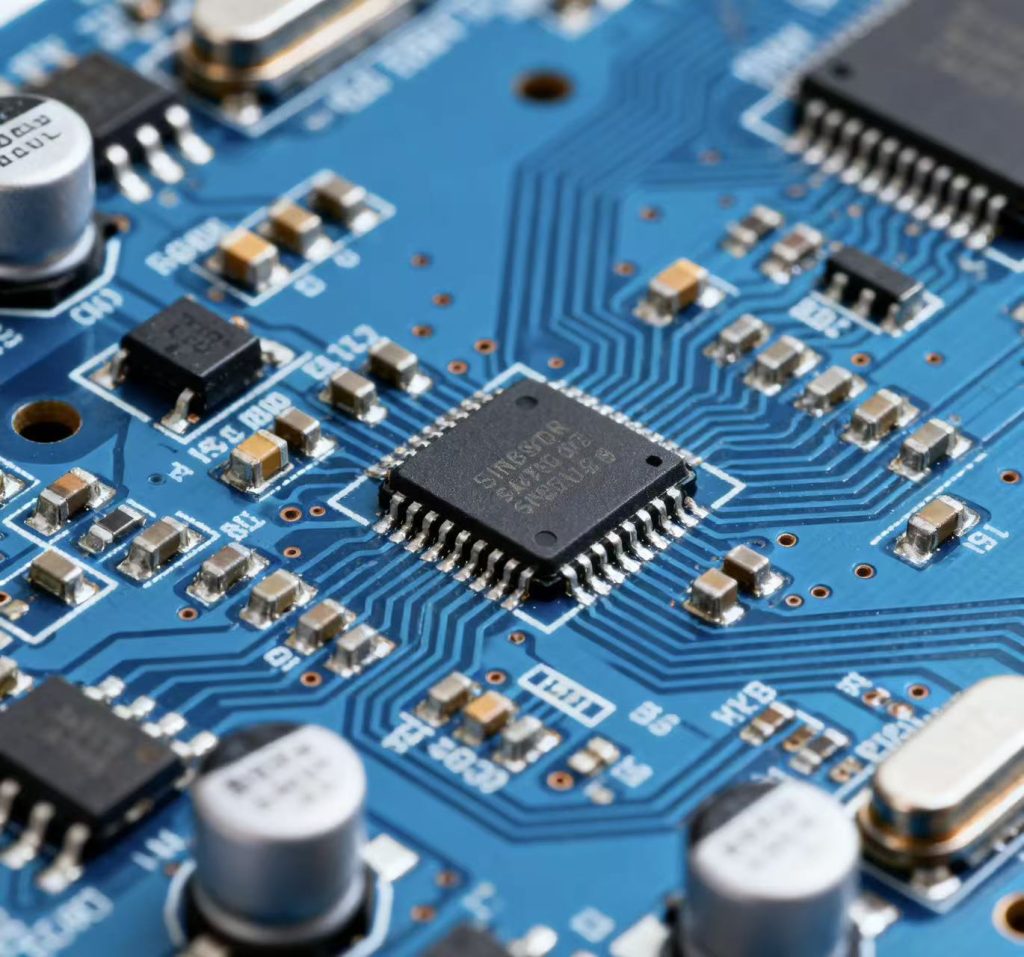
A Sensor PCB (Sensor Printed Circuit Board) is a circuit board specifically engineered to integrate, support, and optimize sensor components within an electronic system. It combines sensitive sensing elements—such as temperature, pressure, motion, gas, humidity, magnetic, or optical sensors—with signal conditioning, amplification, filtering, and communication circuits on a compact and stable platform.
Sensor PCBs are widely used in automotive systems, medical devices, industrial automation, smart home products, wearable electronics, and IoT equipment. Their core function is to enable accurate real-time detection of environmental or physical parameters and ensure reliable data transmission to control units or cloud systems.
Beyond providing mechanical support and electrical interconnection, a well-designed Sensor PCB plays a critical role in:
- Minimizing electromagnetic interference (EMI)
- Preserving signal integrity
- Ensuring measurement accuracy
- Enhancing long-term stability and reliability
With the rapid development of the Internet of Things (IoT), artificial intelligence, and smart manufacturing, Sensor PCBs have become a foundational component in modern intelligent electronic systems.
Design Requirements of a Sensor PCB
Designing a Sensor PCB requires strict engineering control to ensure high sensitivity, precision, and stability.
Layout Optimization and Noise Isolation
Proper component placement is essential. Sensitive sensor elements should be positioned away from noise sources such as switching power supplies, high-frequency circuits, or high-current traces.
Short and direct signal paths between the sensor and signal processing circuitry help reduce signal attenuation and electromagnetic interference. In high-precision applications, differential routing and shielding techniques may be implemented to further improve signal integrity.
Material Selection Based on Environment
Substrate materials must be selected according to operating conditions:
- FR-4 is commonly used for general applications
- High-Tg or heat-resistant materials are preferred in high-temperature environments
- Flexible PCB materials are used for compact or wearable devices
- Metal-core PCBs may be required for effective thermal management
In humid or corrosive environments, moisture-resistant materials and protective surface finishes are essential to prevent degradation.
Signal Integrity and Grounding Design
Accurate impedance control and well-designed grounding structures are critical. Poor grounding can introduce noise and cause measurement drift. Techniques such as ground planes, guard rings, and proper separation of analog and digital grounds are often applied in precision sensor designs.
Thermal Management
Temperature variations can significantly affect sensor accuracy. Proper thermal design—such as thermal isolation, copper balancing, or heat dissipation structures—helps maintain stable sensor performance.
Calibration and Debug Support
Sensor PCBs should support calibration and testing functions. This may include test pads, programming interfaces, trimming circuits, or firmware calibration support to ensure measurement accuracy after assembly.
Manufacturing and Testing Standards
The manufacturing process of Sensor PCBs requires high precision and strict quality control.
Precision Fabrication
Fine traces and accurate pad geometries are critical, especially for miniaturized sensors. Advanced etching, controlled impedance fabrication, and precise soldering techniques ensure reliable electrical performance and mechanical stability.
Assembly Quality Control
Sensor components are often sensitive to temperature and mechanical stress. Controlled reflow profiles and careful handling procedures are necessary to prevent performance degradation.
Inspection and Functional Testing
Quality assurance includes:
- Automatic Optical Inspection (AOI) to detect soldering and placement defects
- Electrical testing to verify connectivity and circuit integrity
- Functional testing to confirm sensor responsiveness and output accuracy
Environmental and Reliability Testing
To ensure durability under real-world conditions, Sensor PCBs may undergo:
- Temperature cycling tests
- Vibration and shock testing
- Humidity exposure testing
- Long-term aging tests
These procedures validate product reliability in demanding automotive, industrial, or medical applications.
Conclusion
A Sensor PCB is more than a simple circuit board—it is a precision-engineered platform that directly influences sensing accuracy, signal stability, and overall system reliability.
Through optimized layout design, appropriate material selection, rigorous manufacturing control, and comprehensive testing, Sensor PCBs enable high-performance sensing solutions across modern intelligent systems. As IoT and smart technologies continue to evolve, the importance of advanced Sensor PCB design and manufacturing will only continue to grow.