As electronic products become increasingly complex, many companies now rely on turnkey PCB assembly services. This model allows manufacturers to handle the entire production process—from PCB fabrication to component procurement and final assembly—simplifying supply chain management and reducing production risks.
However, the final PCB assembly quote can vary significantly depending on design complexity, component availability, order quantity, and production requirements. For engineers, product managers, and procurement teams, understanding how PCBA pricing works can help optimize product cost and improve manufacturing efficiency.
This article provides a comprehensive explanation of PCBA cost structure, key pricing factors, cost calculation methods, and practical strategies to reduce PCB assembly expenses.
What Is Turnkey PCBA?
Turnkey PCBA (Turnkey PCB Assembly) refers to a complete manufacturing service where a supplier manages the entire process of producing assembled circuit boards.
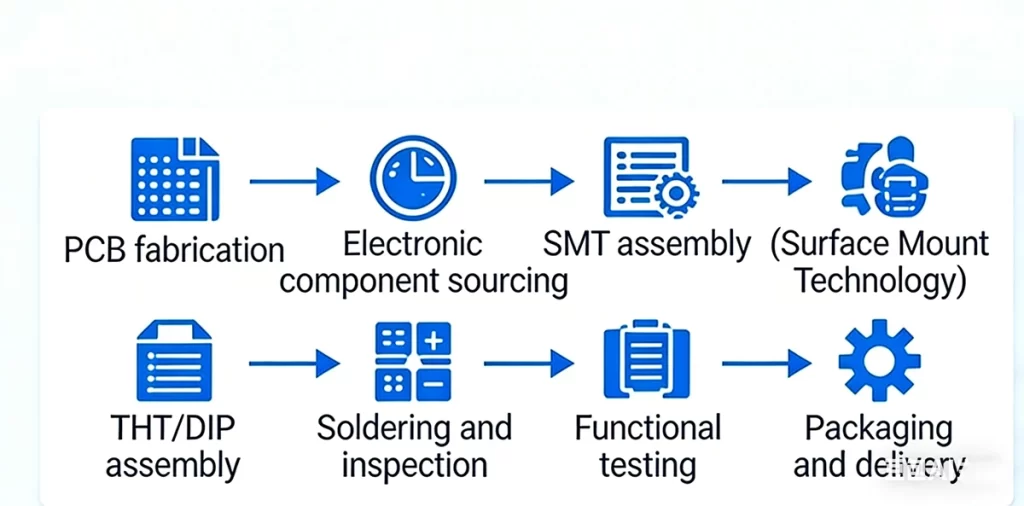
A typical turnkey PCB assembly service includes:
- PCB fabrication
- Electronic component sourcing
- SMT assembly (Surface Mount Technology)
- THT/DIP assembly
- Soldering and inspection
- Functional testing
- Packaging and delivery
Customers typically provide only the design files needed for production, such as:
- Gerber files
- Bill of Materials (BOM)
- Pick-and-Place files
- Assembly drawings
The manufacturer then completes the full production cycle.
From a supply chain perspective, turnkey manufacturing can significantly simplify operations. Research in supply chain engineering shows that integrated manufacturing models reduce coordination complexity and improve production efficiency, particularly in industries with complex component networks such as electronics manufacturing [1].
In addition, centralized component procurement allows manufacturers to leverage purchasing volume, which can reduce BOM cost and improve material availability.
For these reasons, turnkey PCB assembly has become the preferred manufacturing model for startups, OEM companies, and hardware development teams.
Main Components of PCBA Cost
A complete PCB assembly cost breakdown typically consists of several major categories. Understanding these elements helps companies evaluate supplier quotes and identify cost-reduction opportunities.
PCB Fabrication Cost
PCB fabrication cost refers to the cost of manufacturing the bare printed circuit board before components are assembled.
This cost depends on multiple design and manufacturing parameters:
- PCB layer count (2-layer, 4-layer, 6-layer, etc.)
- PCB size and panelization
- Base material (FR-4, high-frequency materials, ceramic substrates)
- Copper thickness
- Surface finish (HASL, ENIG, OSP)
- Special processes such as blind or buried vias
- High-density interconnect (HDI) structures
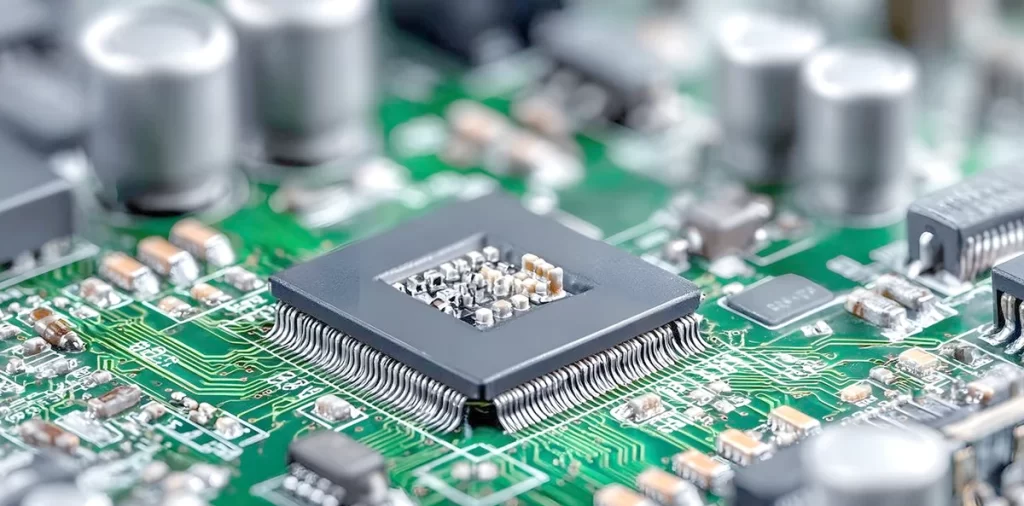
As PCB design complexity increases, the manufacturing process becomes more demanding. Studies in electronic packaging indicate that higher layer counts and finer trace geometries significantly increase fabrication complexity and production cost [2].
For example, HDI boards require microvias and advanced drilling techniques, which increase fabrication expenses compared to standard multilayer PCBs.
Component Cost (BOM Cost)
The Bill of Materials (BOM) usually represents the largest portion of the total PCB assembly cost.
Industry research suggests that electronic components typically account for 40% to 70% of the total manufacturing cost of a PCBA [3].
Component costs depend on several factors:
- Component brand and manufacturer
- Semiconductor chip prices
- Package type (01005, 0201, QFN, BGA, etc.)
- Global market supply and demand
- Lifecycle status (active, end-of-life, obsolete)
During periods of semiconductor shortages, certain microcontrollers, power management ICs, or wireless chips may experience dramatic price increases.
Economic analysis of the global semiconductor market shows that supply chain disruptions can significantly impact electronics manufacturing costs [4].
Therefore, effective component sourcing and supply chain management are essential for controlling PCBA cost.
SMT and Through-Hole Assembly Cost
The next major portion of PCB assembly cost comes from the assembly process itself, especially SMT assembly cost.
Surface Mount Technology (SMT) allows electronic components to be mounted directly onto the PCB surface using automated placement machines.
SMT assembly costs typically depend on:
- Number of placement points
- Component package complexity
- Double-sided assembly
- Fine-pitch or high-precision components
- Production line efficiency
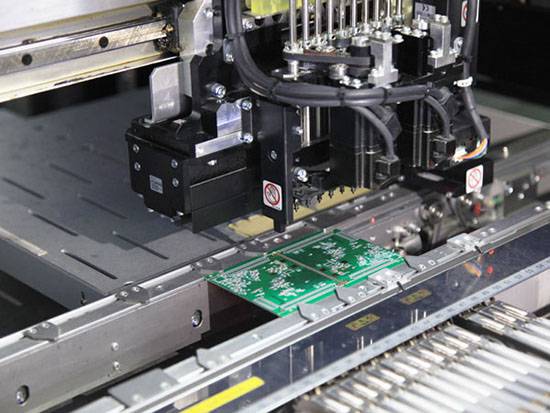
A typical SMT production line includes:
- Solder paste printer
- Pick-and-place machine
- Reflow oven
- Automated Optical Inspection (AOI) system
Research on SMT manufacturing optimization shows that improving component placement sequences and machine scheduling can significantly reduce production time and operational costs [5].
For PCBs that contain through-hole components, DIP or THT assembly may also be required. These processes can involve manual labor or wave soldering, which adds additional cost.
Testing and Quality Control Cost
Testing plays a crucial role in ensuring the reliability and functionality of assembled circuit boards.
Common PCB testing methods include:
- AOI (Automated Optical Inspection)
- X-ray inspection
- ICT (In-Circuit Testing)
- Functional Circuit Testing (FCT)
- Burn-in or aging tests
While testing increases production cost, it significantly reduces failure rates and field returns.
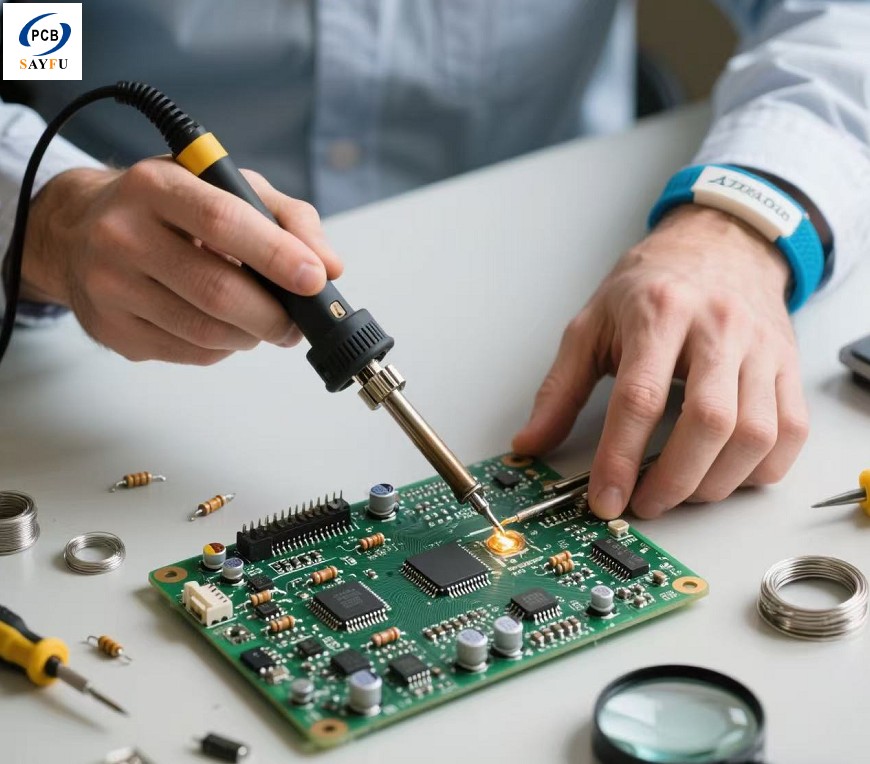
Studies in electronics manufacturing show that automated inspection technologies can improve manufacturing yield and reduce long-term reliability risks [6].
For industries such as automotive electronics, aerospace, and medical devices, extensive testing procedures are often required to meet strict quality standards.
Manufacturing Overhead and Logistics
In addition to direct production expenses, PCB assembly services include operational costs such as:
- Manufacturing management
- Equipment depreciation
- Factory utilities
- Warehousing and logistics
- Order management
These costs typically account for around 5–10% of the total PCBA cost.
Although they may appear minor compared with component costs, efficient production management can still influence overall manufacturing efficiency.
Key Factors Affecting PCB Assembly Pricing
Even when two products appear similar, their PCB assembly quotes may differ significantly. Several variables influence the final manufacturing cost.
PCB Design Complexity
The complexity of the PCB design has a direct impact on manufacturing cost.
Factors that increase complexity include:
- High layer count PCBs
- High-density interconnect structures
- Fine-pitch BGA packages
- High-frequency signal routing
Engineering research indicates that increasing circuit density raises both manufacturing difficulty and defect probability, which increases production costs [2].
Therefore, design optimization is essential for cost control.
Component Availability
Component availability is one of the most unpredictable cost drivers.
When key components are in short supply, manufacturers may need to:
- Source parts from alternative suppliers
- Purchase components at higher spot prices
- Delay production until materials are available
Research on global semiconductor supply chains highlights that material shortages can significantly disrupt electronics manufacturing schedules [4].
Production Volume
Production quantity strongly influences the unit cost of PCB assembly.
Typical cost patterns include:
| Production Stage | Unit Cost |
|---|---|
| Prototype production | Highest cost |
| Low-volume production | Moderate cost |
| Mass production | Lowest cost |
Prototype builds often involve engineering setup costs, machine programming, and stencil production. These fixed costs are spread across larger quantities during mass production, reducing the unit price.
Lead Time Requirements
Short lead times can also increase manufacturing costs.
Urgent orders may require:
- Priority scheduling
- Overtime production
- Express component sourcing
These additional efforts often increase the final PCB assembly price.
How to Calculate PCBA Manufacturing Cost
Although exact pricing varies between manufacturers, the general PCBA cost calculation model includes several key components.
Typical cost elements include:
- PCB fabrication cost
- Component procurement cost (BOM cost)
- SMT assembly cost
- Through-hole assembly cost
- Engineering setup cost
- Testing cost
- Packaging and logistics cost
- Additional value-added services
A simplified formula for PCBA cost estimation can be expressed as:
PCBA Cost = (PCB Cost + Component Cost + Assembly Cost + Engineering Cost + Testing Cost + Logistics Cost) × Production Quantity + Profit Margin
In many projects, component cost and PCB fabrication cost represent the majority of total manufacturing expenses.
Need Turnkey PCB Assembly?
From PCB fabrication and component sourcing to SMT assembly and testing, we provide reliable one-stop manufacturing to help reduce your PCB assembly cost and speed up production.
Turnkey PCBA vs. Consigned PCBA
There are two main manufacturing models used in PCB assembly services.
Turnkey PCB Assembly
In a turnkey PCB assembly service, the manufacturer manages:
- PCB fabrication
- Component procurement
- PCB assembly
- Testing and delivery
Advantages include:
- Simplified supply chain management
- Reduced procurement workload
- Faster production cycles
Consigned PCB Assembly
In a consigned PCBA model, the customer provides all components while the manufacturer performs only the assembly process.
Advantages include:
- Full control over component sourcing
- Greater transparency in BOM costs
However, this model increases supply chain complexity and may lead to production delays if components are missing.
Strategies to Reduce PCB Assembly Cost
Companies can reduce manufacturing expenses through several practical strategies.
Optimize PCB Design (Design for Manufacturability)
Design optimization is one of the most effective ways to reduce production cost.
Examples include:
- Using standard PCB thickness
- Reducing unnecessary PCB layers
- Avoiding extremely small component packages
Manufacturing research suggests that design-for-manufacturability (DFM) principles can reduce manufacturing costs by up to 20% [7].
Standardize Components
Using common component packages such as 0603 or 0402 improves assembly efficiency and reduces SMT setup complexity.
Increase Production Volume
Larger production runs reduce unit costs by spreading fixed engineering and tooling expenses across more units.
Improve Supply Chain Coordination
Efficient procurement and inventory management can reduce material costs and prevent production delays.
Integrated supply chain systems are particularly important for managing electronic component sourcing.
How to Get an Accurate PCB Assembly Quote
To receive an accurate PCB assembly quotation, customers should provide complete production documentation.
Typical required files include:
- Gerber files
- BOM (Bill of Materials)
- Pick-and-Place files
- Assembly drawings
- Testing requirements
- Production quantity
Providing clear and complete documentation allows manufacturers to estimate costs more accurately and avoid unexpected price adjustments during production.
How to Choose a Reliable PCBA Manufacturer
Selecting the right PCB assembly partner requires evaluating multiple factors beyond price.
Key considerations include:
Manufacturing experience
Experienced manufacturers typically provide better process control and engineering support.
Production equipment
Advanced SMT production lines improve assembly precision and efficiency.
Quality control systems
International standards such as ISO quality certification indicate reliable manufacturing practices.
Supply chain capability
Strong procurement networks help ensure stable component availability.
Conclusion
The total PCB assembly cost is determined by multiple factors, including PCB fabrication, component sourcing, SMT assembly, testing procedures, and supply chain management.
By understanding these cost drivers, companies can better control manufacturing expenses and make informed decisions when selecting PCB assembly services.
Effective strategies for reducing electronics manufacturing cost include:
- Optimizing PCB design
- Standardizing components
- Increasing production volume
- Working with experienced turnkey PCB assembly providers
Through careful design planning and efficient supply chain management, companies can significantly reduce PCBA manufacturing costs while maintaining high product quality and reliability.
References
[1] Ivanov, D. Supply Chain Management in Complex Manufacturing Systems. International Journal of Production Research.
[2] Ulrich, K., & Eppinger, S. Product Design and Development. McGraw-Hill.
[3] IEEE Electronics Packaging Society. Cost Structure of Electronic Assembly Manufacturing.
[4] Harvard Business Review. Global Semiconductor Supply Chain Disruptions.
[5] IEEE Transactions on Automation Science and Engineering. Optimization of SMT Placement Scheduling.
[6] IEEE Transactions on Components, Packaging and Manufacturing Technology. Automated Inspection in PCB Manufacturing.
[7] MIT Manufacturing Research. Design for Manufacturability in Electronics Production.