With the development of science and technology, the application of PCB is more and more extensive. PCB is divided into single-sided, double-sided and multi-layer boards. Common multi-layer boards are generally 4-layer boards or 6-layer boards, and complex multi-layer boards can reach Dozens of layers are widely used in consumer electronics, computers, communication tools, medical equipment and other fields.
Application of PCB
In terms of application industry distribution, consumer electronics accounted for the highest proportion, reaching 39%; followed by computers accounted for 22%; communications accounted for 14%; industrial control and medical equipment accounted for 14%; automotive electronics accounted for 6%; defense and Aerospace accounts for 5%. Aerospace and medical instruments have very high requirements for PCB precision. Although my country’s current PCB industry scale is already the world’s largest, but in terms of the overall technical level, it still lags behind the world’s advanced level. In terms of product structure, multi-layer boards account for most of the output value, but most of them are low-end products with less than 8 layers. Although HDI and flexible boards have a certain scale, their technical content is similar to that of foreign advanced products. There are gaps in products, and few companies can produce IC boards with the highest technical content in China.
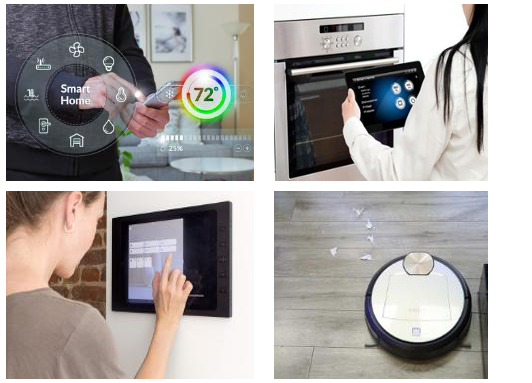

The reason why PCB can be so widely used is that it has many unique advantages, which are summarized as follows.
- High density is possible. The high density of PCB can be developed with the improvement of integrated circuit integration and the advancement of mounting technology.
- High reliability. Through a series of inspections, tests and aging tests, the PCB can be guaranteed to work reliably for a long time.
- Designability. For various performance requirements of PCB (electrical, physical, chemical, mechanical, etc.), printed board design can be realized through design standardization and standardization, with short time and high efficiency.
- Productivity. With modern management, standardization, scale (quantification), automation and other production can be carried out to ensure the consistency of product quality.
- Testability. A relatively complete test method, test standard, various test equipment and instruments have been established to detect and identify the qualification and service life of PCB products.
- can be assembled. PCB products are not only convenient for standardized assembly of various components, but also automated and large-scale mass production. At the same time, PCB and various component assembly parts can also be assembled to form larger parts, systems, and even complete machines.
- Maintainability. Since PCB products and various component assembly components are standardized in design and mass production, these components are also standardized. Therefore, once the system fails, it can be replaced quickly, conveniently and flexibly, and the service system can be quickly restored.