Double-Sided FPC PCB for Medical Machine Applications
Images
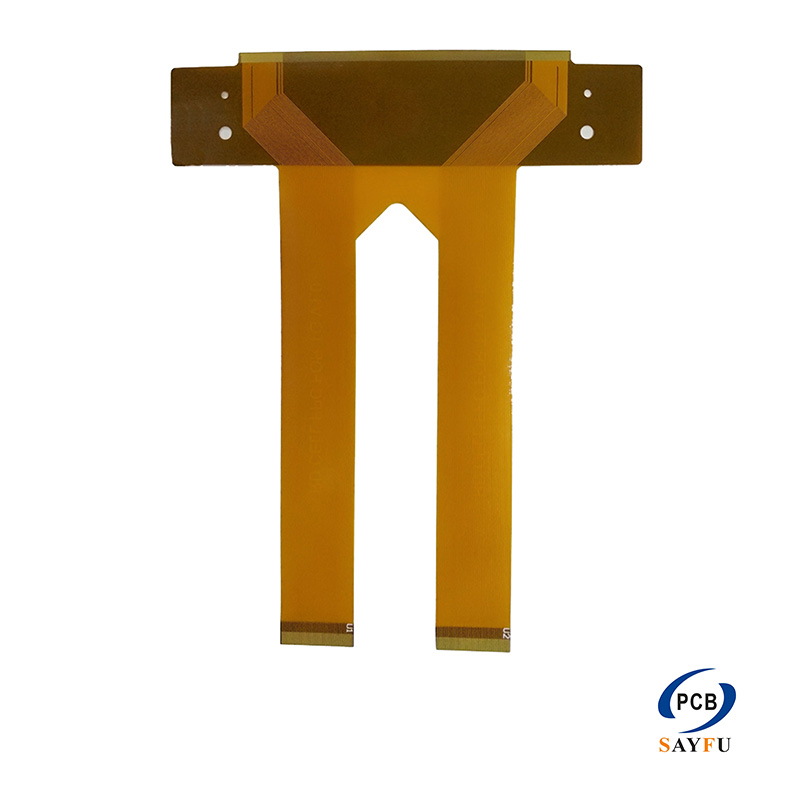
General Specification:
Material: Base PI 50um + coverlay PI 50um
Copper thickness: 35um
Board thickness: 0.18mm
Trace width/space: 4/4mil
Surface finish: Immersion Gold
Application:Medical
This product is a double-sided FPC PCB for medical machine and compact electronic applications. Compared with a single-sided flex circuit, a double-sided FPC gives more routing flexibility while still supporting compact installation and lightweight interconnection.
Double-sided FPC should be reviewed for bend area, via placement, coverlay openings, connector position, and whether the circuit will be static or dynamic in the final product. Medical machine use also means the customer should define reliability, documentation, and inspection expectations before production.
Double-Sided Flexible Routing
The benefit of a double-sided FPC is the ability to route signals on both sides of the flexible substrate. This can help compact products reduce cable complexity, connect modules in limited space, and keep the final assembly lighter than a rigid-board-only design.
If the FPC will be delivered with components, connectors, or additional inspection, assembly requirements should be discussed before quotation. For related assembly context, see turnkey PCB assembly.
Application Fit
This double-sided FPC is suitable for medical machine electronics, compact control modules, flexible interconnects, display connections, and products that need routing on both sides of a flexible circuit.
What to Confirm Before Production
Before production, confirm the FPC stack-up, copper thickness, bend radius, via requirements, coverlay openings, connector area, stiffener requirement if any, surface finish, and inspection requirements. If the product is used in medical equipment, the customer should also provide any reliability or documentation requirements.
Custom Double-Sided FPC Manufacturing
For quotation and manufacturability review, provide Gerber files, drill files, and FPC stack-up drawing, bend-area notes, connector drawings, coverlay requirements, assembly notes if applicable, inspection requirements, quantity, and application background. For file preparation questions, see the FAQ on design and technical issues.