Single-Sided Flexible PCB for Compact Electronic Assemblies
Images
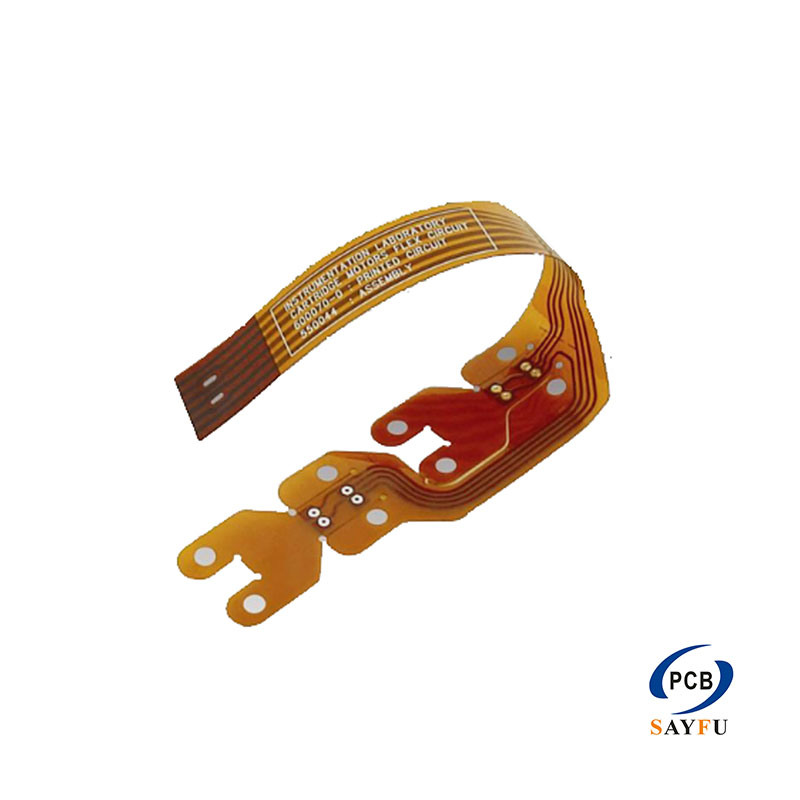
General Specification:
Layer Count: 1-6Layers;
Board thickness: 0.1~1.6mm(with stiffener); Base material: Polyimide 50um, 25um, 20um, 12um;
Coverlay: PI 12.5um + AD 15um, PI 25um + AD 30um; Copper weight: 1/3oz & 1/2oz & 1oz; Material Vendor: Dupont, Taiflex, Grace, Panasonic etc… Surface finish: Immersion Gold, OSP.
This product is a single-sided flexible PCB for compact electronic assemblies where flexible routing can reduce connector use, simplify installation, or replace multiple rigid interconnects. Flexible PCB can help reduce assembly time, lower assembly error risk, support high-density layouts, improve airflow, and fit dynamic or high-flex application requirements.
Single-sided FPC is often selected when the circuit does not require complex layer-to-layer routing but still needs a lightweight, bendable interconnect. The final design should be reviewed for bend area, copper direction, coverlay opening, connector position, and whether the flex circuit will move during use.
Flexible PCB Design Value
Flexible PCB can make compact products easier to assemble because the circuit can follow the mechanical shape of the device. This can reduce cable clutter and help connect boards or modules in spaces where a rigid PCB is not practical.
The main design risk is mechanical stress. Traces, vias, solder joints, and connector areas should be kept away from unsuitable bend zones whenever possible. If the FPC will be assembled with other electronics, see turnkey PCB assembly for related assembly context.
Application Fit
Single-sided flexible PCB is suitable for compact devices, connector tails, display connections, control panels, lightweight interconnects, and products where the circuit needs to bend during installation or fit into a narrow space.
What to Confirm Before Production
Before production, confirm the FPC stack-up, copper thickness, polyimide thickness, coverlay openings, bend radius, connector area, surface finish, and whether the product needs static bending or repeated dynamic flexing.
Custom Single-Sided FPC Manufacturing
For quotation and manufacturability review, provide Gerber files, drill files, and FPC outline drawing, stack-up requirement, bend-area notes, connector drawings, coverlay requirements, surface finish, quantity, and assembly needs. For design preparation questions, see the FAQ on design and technical issues.