Flexible PCB for Industrial Control Intercom Applications
Images
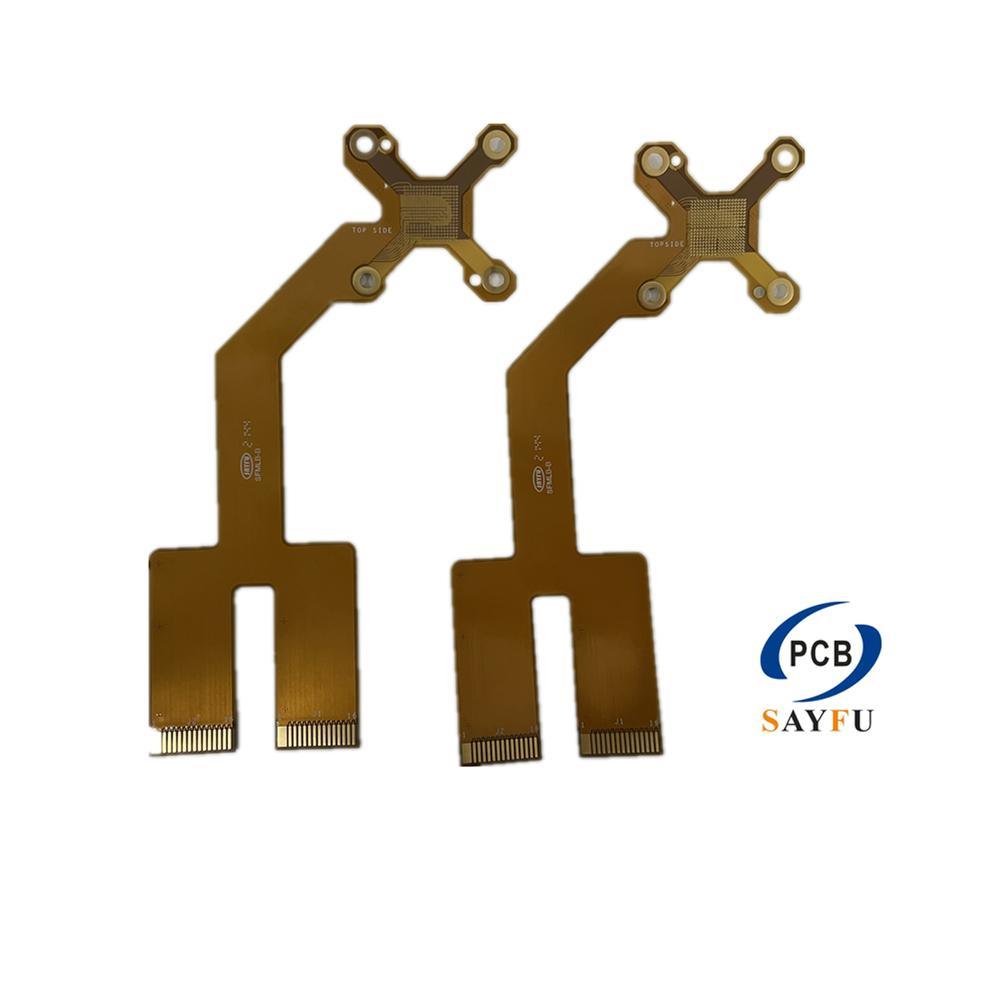
General Specification:
Layer No: 1layer
Unit size/mm: /mm*/mm
Panel size/mm: 250mm*140mm
Material:FPC
Finished Thickess: 0.1-0.15mm
Finished Copper: ,1/Oz
Surface treatment:ENIG
Solder mask: PI Coverlay
This product is a flexible PCB for industrial control intercom applications where installation space, connector count, and routing flexibility are important. Flexible PCB can help reduce assembly time, lower assembly error risk, support high-density layouts, improve airflow, and replace multiple rigid boards or connectors in compact products.
For an intercom or industrial control product, FPC can help connect modules across limited space while keeping the assembly lighter and easier to route. The final design should still be reviewed for bend area, connector position, stiffener needs, coverlay openings, and expected movement.
Flexible Routing for Intercom Designs
Flexible PCB is useful when a rigid board or wire harness makes the product harder to assemble. It can support compact installation and reduce connector count, but the bend area must be planned so copper traces are not placed under avoidable mechanical stress.
If the FPC connects to a rigid PCB or an assembly module, the connector area, stiffener location, and assembly sequence should be checked early. For related assembly context, see turnkey PCB assembly.
Application Fit
This FPC is suitable for industrial control intercom products, control panels, display modules, compact electronic assemblies, and products where a flexible connection can simplify installation or replace multiple rigid interconnects.
What to Confirm Before Production
Before production, confirm the FPC outline, bend radius, copper thickness, polyimide stack, coverlay openings, connector area, stiffener requirement, surface finish, and whether the flex circuit will be static or dynamic in the final product.
Custom FPC Manufacturing
For quotation and manufacturability review, provide Gerber files, drill files, and FPC stack-up drawing, bend-area notes, connector drawings, stiffener requirements, coverlay openings, surface finish, quantity, and assembly requirements. For file preparation questions, see the FAQ on design and technical issues.