High-Frequency PCB for 5G and RF Communication Hardware
Images
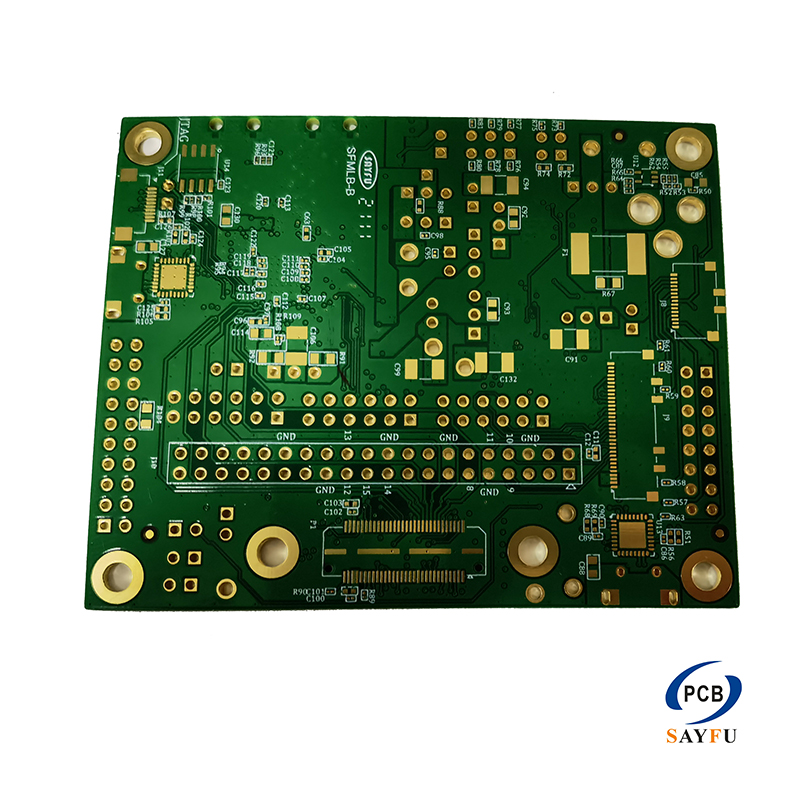
General Specification:
- Layer No: 10 layer
- Panel size/mm: 265mm*45mm
- Material: RO4300C
- Finished Thickess:1.6mm
- Finished Copper: 35um
- Surface treatment: ENIG
- Soldermask: Green
- Silkscreen: White
- Special Technology: NA
This high-frequency PCB product is intended for projects that require RF materials such as Rogers, Arlon, and other high-frequency base materials. These materials are commonly selected when the PCB must support communication systems, automotive electronics, 5G hardware, or other circuits where signal loss, dielectric stability, and stack-up control matter more than they do on a standard FR-4 board.
SAYFU supports high-frequency PCB projects as part of a broader PCB manufacturing range that includes rigid multilayer PCB, flexible PCB, hybrid PCB, HDI board, metal-based PCB, heavy copper PCB, and high-frequency PCB. For RF or 5G designs, the exact material grade, copper weight, dielectric thickness, impedance target, and surface finish should be confirmed from your Gerber files, stack-up drawing, and electrical requirements before production.
Why High-Frequency Material Selection Matters
High-frequency circuits are sensitive to dielectric loss, thickness tolerance, copper roughness, and impedance variation. A material choice that works for ordinary digital routing may not be suitable for RF transmission lines, antenna feed networks, automotive radar-related circuits, or high-speed communication modules.
Rogers, Arlon, and other HF materials are used when the design needs more stable electrical behavior than conventional FR-4 can provide. The right material depends on the operating frequency, insertion-loss target, temperature environment, board thickness, and whether the design is a pure RF board or a hybrid stack-up using both RF material and FR-4.
If your design has controlled impedance, RF traces, mixed dielectric materials, or tight insertion-loss requirements, provide the stack-up and impedance notes during quotation. This allows the engineering team to review whether the selected material and layer structure match the intended signal path.
Manufacturing Considerations for High-Frequency PCB
High-frequency PCB fabrication requires tighter attention to process details than a general-purpose PCB. Material handling, lamination control, drilling, surface treatment, and etching can all affect RF performance and production yield.
Key review points include:
- Whether the selected Rogers, Arlon, or other HF laminate is suitable for the required frequency range
- Whether the stack-up can support the target impedance and dielectric spacing
- Whether the trace geometry and material stack match the RF design rules
- Whether plated holes, vias, and transitions could affect signal integrity
- Whether the selected fabrication process is suitable for both solderability and RF performance
- Whether the project uses hybrid construction with FR-4, HDI, heavy copper, or metal-based sections
For 5G and communication-related boards, these checks should be completed before layout release whenever possible. Changing RF material, trace width, or dielectric thickness after fabrication review can affect impedance and may require layout adjustment.
Suitable Applications
This product is most relevant for engineering teams sourcing high-frequency PCB fabrication for:
- 5G communication modules and RF-related hardware
- Wireless communication equipment
- Automotive electronic systems that require stable signal behavior
- RF test or control boards
- Hybrid PCB designs that combine high-frequency material with other PCB technologies
- Multilayer boards where material selection and impedance review are part of the RF design process
The application list indicates possible fit, not automatic suitability. Final material selection and manufacturability should be reviewed against your frequency range, signal requirements, thermal environment, and mechanical constraints.
RFQ and Engineering Review Information
To quote and review a high-frequency PCB project accurately, provide as much of the following information as possible:
- Gerber files
- Stack-up drawing
- Material requirement, such as Rogers, Arlon, or another specified HF laminate
- Controlled impedance or RF performance notes
- Drill drawing and plated-hole requirements
- Quantity and production stage, such as prototype, low volume, or repeat production
- Any reliability requirements that must be checked before fabrication
If the material grade is not fixed yet, send the operating frequency, target impedance, and application environment. SAYFU can review the project information and confirm which details need to be locked before manufacturing.
For related technical background, see the resources on Rogers material and how to choose high-frequency and high-speed boards. For broader fabrication capability review, refer to PCB manufacturing capabilities.