Copper Clad Laminate grades
FR-4 A1 grade copper clad plate this grade is mainly used in military, communications, computers, digital circuits, industrial instruments, automobile circuits and other electronic products. The quality of this series of products has reached the world first-class level, which is the highest grade and best performance products of our company.
FR-4 A2 grade copper clad plate this grade is mainly used for ordinary computers, instruments and meters, advanced home appliances and general electronic products. This series of copper clad plates are widely used, and each performance index can meet the needs of general industrial electronic products. Have a good price performance ratio. To enable customers to effectively improve price competitiveness.
FR-4 A3 grade copper clad plate this grade copper clad plate is our company specialized for the home appliance industry, computer peripheral products and ordinary electronic products (such as toys, calculators, game consoles, etc.) development and production of FR-4 products. Its characteristic lies in the performance meets the requirement premise, the price has the competitive advantage extremely.
FR-4 AB copper clad plate This level of plate is our company’s unique low-end products. But each performance index still can satisfy the need of common home appliance, computer and general electronic product, its price is the most competitive, performance price ratio is quite outstanding also.
FR-4 GRADE B copper clad plate.This grade of plate is the company’s secondary product plate, poor quality stability, is not suitable for the larger area of the circuit board products, generally applicable to the size of 100mmX200mm products. It is the cheapest, but customers should choose carefully.
CEM-3 series copper clad plate this kind of product our company produces three kinds of base material color, namely white, black and natural color. Mainly used in computer, LED industry, clocks and watches, general household appliances and ordinary electronic products (such as VCD, DVD, toys, games, etc.). Its main characteristics are good punching performance, suitable for large quantities of STAMPING process forming PCB products. This series of products have A1, A2, A3 three quality grade products, a variety of different requirements of customers, can choose to use.
This series of products have three quality grades: A1, A2 and A3. There are fr-4 and G10 types of copper clad plates. Its thickness, blackness, solubility and other quality indicators completely meet the requirements of watch products. The quality of A1 series of such plates has reached the world-class level, and many of the advanced quartz watches abroad choose this series of plates. The quality of A3 grade products meets the quality level required by ordinary clocks and watches, and the price is the most competitive.
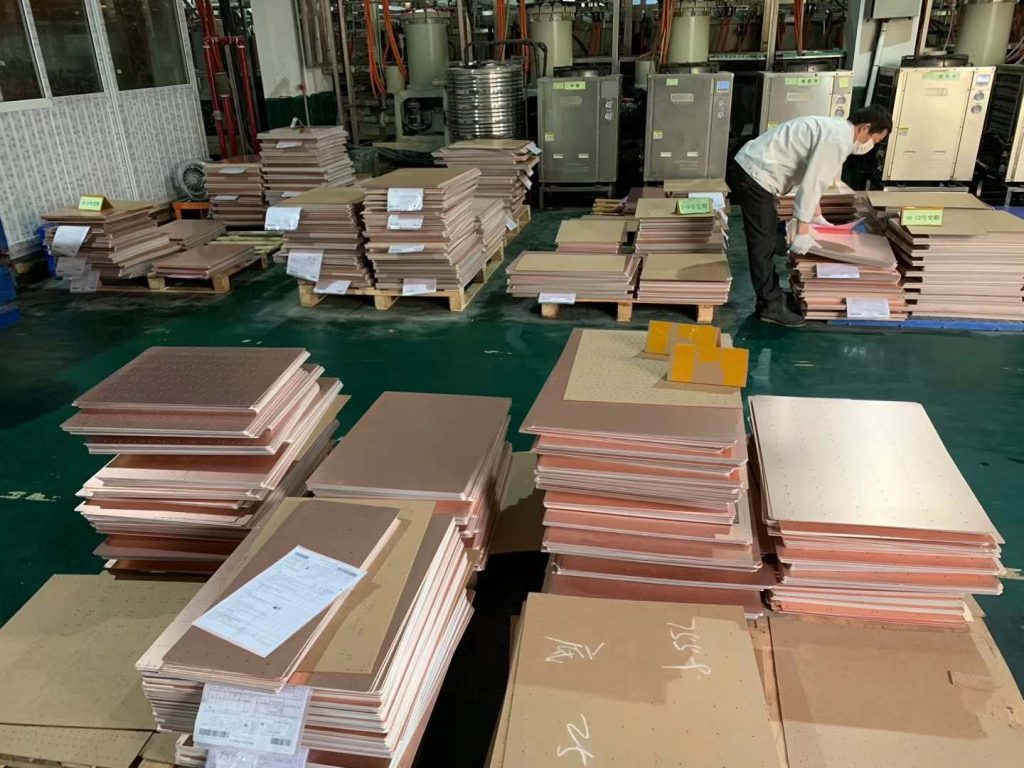
China Quick Turn Prototype PCB Manufacturer GUANG DONG SAYFU MULTILAYER CIRCUITS CO.,LIMITED provides customers with the following multilayer materials(Copper Clad Laminate grades):
1) semi-cured sheet (1080, 2116, 7628, etc.),
2) copper foil (0.5 OZ, 1.0 OZ, 1.5 OZ, 2.0OZ, 3OZ, etc.),
3) release film,
4) laminating special kraft paper.
5)High performance aluminum base copper clad plate, high Tg value copper clad plate, high CTI (compared with the creepage mark index) copper clad plate.